How to Cast Runes: 4 Methods for Beginners
Casting runes is not reading cards. It is a physical, tactile practice — you hold the stones, feel their weight, and let one call to you. This is what makes rune divination unique, and what makes a quality set of rune stones so important.
Before You Begin: What You Need
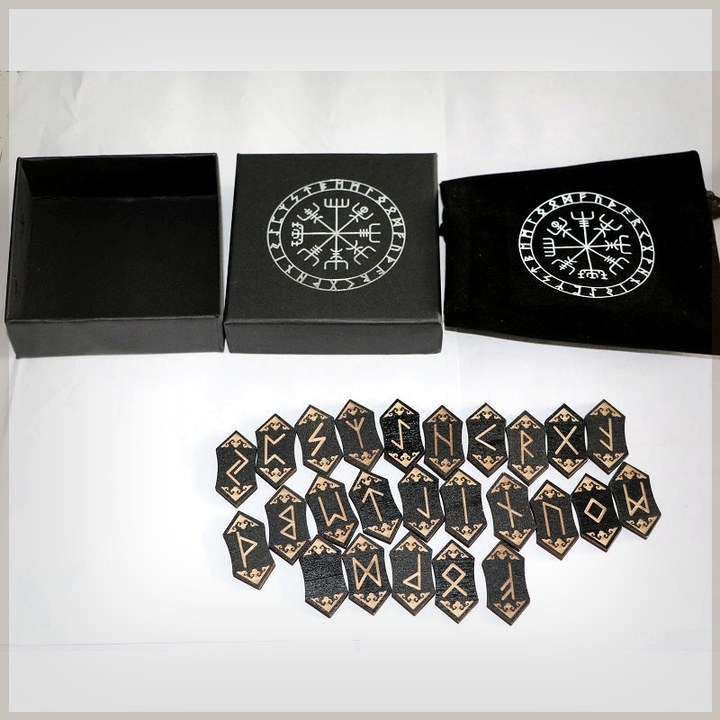
- A rune stone set — ideally a complete Elder Futhark set of 24 stones (amethyst, obsidian, rose quartz, or carved wood all work well)
- A casting cloth — a dark cloth spread on a flat surface, to define your reading space and keep stones from rolling
- A bag or pouch — to keep your stones, and to draw from without looking
- A quiet moment — rune casting works best when you bring a clear question or intention
Method 1: The Single Rune Draw (Daily Practice)
The simplest and most powerful daily practice. Hold your rune bag, close your eyes, and bring a question or intention to mind. Reach in and draw one stone without looking.
How to read it: Place it in front of you. Note whether it appears upright or reversed (upside down). Look up its meaning in the Rune Library. Ask yourself: how does this apply to what I am navigating today?
Best for: Daily guidance, morning intention setting, simple yes/no questions.
Method 2: The Three-Rune Norn Layout (Past / Present / Future)
Named after the three Norns — the Norse weavers of fate — this is the most widely used multi-rune layout. Draw three stones and place them left to right.
- Position 1 (Left) — Urðr / The Past: What has led to this situation? What energy or event is influencing the present?
- Position 2 (Center) — Verðandi / The Present: What is the current energy? What is happening right now?
- Position 3 (Right) — Skuld / The Future: Where is this heading if the current course continues? What energy is approaching?
Best for: Understanding a situation from multiple angles, relationship questions, decision-making.
Method 3: The Nine-Rune Cast (The Full Reading)
This is the most complete rune divination method, and the one closest to ancient Norse practice. The number nine is sacred in Norse mythology — Odin hung for nine nights, there are nine realms, nine is the number of completion.
How to cast: Hold all 24 stones in your hands. Focus on your question. Cast them gently onto your casting cloth. Only read the stones that land face-up (symbol visible). Ignore stones that land face-down — they are not speaking to this question.
How to read positions:
- Center: The rune(s) closest to the center hold the strongest, most immediate message
- Near the edges: Secondary influences, things that are further away or less immediate
- Clusters: Runes that land near each other are related — read them together
Best for: Complex life questions, major decisions, deep readings where you want the full picture.
Method 4: The Nordic Circle Method
Draw runes from your bag one at a time, placing them clockwise in a circle of nine positions. Each position represents a specific aspect of the question (similar to a Celtic Cross in tarot, but unique to rune practice).
- Position 1: The heart of the matter
- Position 2: Opposing force or challenge
- Position 3: What underlies this (hidden cause)
- Position 4: Recent past
- Position 5: Possible future (if current path continues)
- Position 6: External influences
- Position 7: Your own energy / attitude
- Position 8: What others around you contribute
- Position 9: The outcome / synthesis
On Reversed Runes
Unlike tarot, where reversals are standard practice, rune reversals are optional. Traditional Norse practitioners often read all runes upright. Modern practice varies. When you encounter a reversed rune, it generally suggests the energy of that rune is blocked, delayed, or needs to be approached with caution. You choose your own approach — consistency matters more than any single rule.
Building a Daily Practice
The most powerful rune work happens consistently. Drawing one rune each morning, holding it, carrying your question or intention through the day, then reflecting in the evening — this is how runes become integrated into how you move through the world. Not as a party trick, but as a genuine navigational tool.
Related: What Are Runes? · Bind Runes Guide · The Three Aettir